
How to Match Earrings With Necklines and Outfits
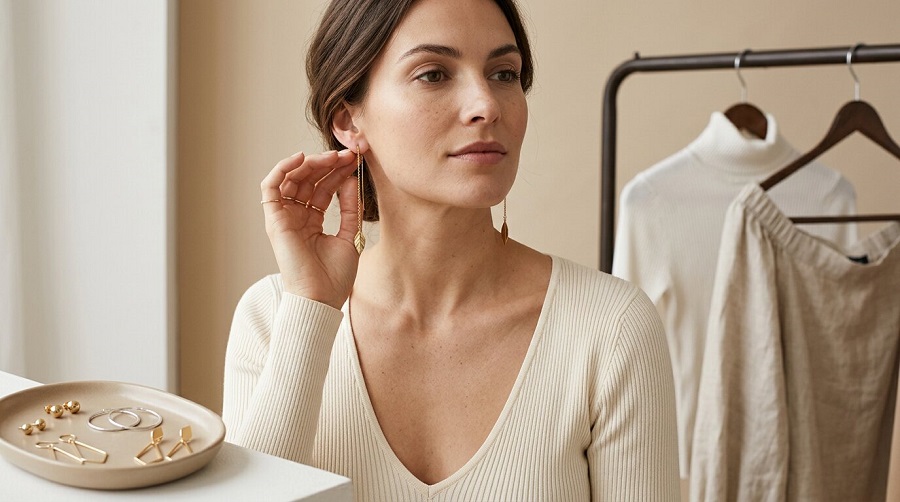
You'd be surprised how much a single earring choice can make or break an outfit. The wrong pair draws attention to awkward proportions, while the right one pulls everything together effortlessly. It all starts with your necklineand once you understand that connection, getting dressed becomes far less complicated. The rules aren't hard, but they do matter.
Why Your Neckline Should Dictate Your Earring Choice
Your neckline works as a natural frame for your face and upper body, so choosing earrings that complement it can quietly elevate the entire look. When the neckline sits high, like with turtlenecks or structured tops, it already fills the space near the jaw and neck, making smaller pieces such as studs or slim hoops feel intentional rather than crowded.
Deeper cuts, like V-necklines, create a vertical pathway that longer drop earrings can follow, giving a sense of flow and proportion. Off-shoulder styles open up the neckline and shoulders, allowing more expressive pieces to think intricate drops or statement designs to stand out without overwhelming the outfit. Meanwhile, wider necklines like boat necks benefit from softer, delicate drops that introduce movement without clashing with the horizontal line.
Halter styles or heavily embellished tops tend to shift attention upward, often leaving earrings to carry the visual interest on their own. In these cases, slightly bolder designs can take the lead without competing against other elements. Understanding these subtle relationships helps create balance, where each piece feels placed rather than added.
If you want to find a quick way to find styles that already align with these principles and reflect what works in a specific region, platforms like https://earwear.dk/ are especially useful—they understand local preferences and offer curated options that make pairing earrings with different necklines feel more intuitive.
Best Earrings for V-Neck, Scoop, and Plunging Necklines
V-neck, scoop, and plunging necklines create an open area at the chest and décolletage, offering more space to balance with earrings than higher necklines.
For V-necks and plunging cuts, long drop earrings or tapered chandelier styles measuring roughly 4–8 cm work well because they visually follow the V shape and can help create the impression of a longer neck. Deep plunging necklines can support more visually prominent pieces, such as jhumkas or chandelier earrings in gold, diamond, or Polki finishes, which draw attention to the face while complementing the openness of the neckline.
Scoop necklines are generally suited to mid-length teardrop earrings or more substantial studs, which fill the open area without competing excessively with the neckline shape.
When the gown is heavily embellished, it's usually more cohesive to choose earrings that repeat one main color or metal tone from the outfit, helping the overall look appear coordinated rather than visually crowded.
Earring Pairings for Off-Shoulder, Boat Neck, and Halter Styles
Off-shoulder, boat neck, and halter necklines emphasize different parts of the upper body, so earring choices are more effective when they follow those visual lines rather than compete with them.
For off-shoulder styles, the shoulders and collarbones are prominent, so medium to long earrings such as chandbalis or linear danglers (approximately 6–10 cm) help frame the face and balance the open neckline.
Boat necklines create a strong horizontal line across the shoulders. In this case, smaller earringssuch as studs or compact hoops (up to about 2.5 cm), reduce visual clutter near the neckline and keep the focus on the broad shoulder line.
Halter necklines draw attention upward toward the neck and shoulders and can make necklaces difficult to pair without overlapping or crowding the strap area. Here, bold hoops or longer drop earrings (around 8–12 cm) can add interest without interfering with the neckline.
If the outfit is heavily embellishedespecially around the neck or shoulderssimpler earrings are generally more cohesive. In such cases, shifting emphasis to bracelets and rings can help maintain balance in the overall look.
How to Match Earrings With High Necks and Turtlenecks
High necklines and turtlenecks limit the visual space between the face and the garment, so earrings should stay relatively close to the ear. Studs or small hoops (approximately 6–12 mm) maintain proportion and prevent the area from appearing crowded.
With chunky or heavily textured turtlenecks, simple metal studs in gold or silver reduce visual competition and keep the focus balanced. Sleeker, fitted styles can accommodate a medium drop or a sculptural hoop up to about 40 mm, especially if you omit a necklace to avoid clutter.
Ear cuffs, stackable huggies, or multiple small hoops can add detail without overwhelming the neckline. Aligning the metal type and earring style with the formality of the setting helps create a cohesive, intentional look.
Choosing Earrings by Occasion, Metal, and Proportion
Occasion, metal, and proportion work best when considered together, as each factor influences how earrings integrate into an overall look.
For formal events, structured or ornate designs such as chandeliers or jhumkas in gold, diamonds, or Polki typically align with dressier clothing and more elaborate styling. For work or daytime settings, smaller studs, huggies, or simple hoops tend to be more practical and understated, which usually suits professional or casual environments.
Metal choice can be guided by color temperature: yellow gold generally complements warm-toned fabrics (such as earthy, red, or mustard hues), while silver, white gold, or platinum often pair well with cool-toned palettes (such as blues, greys, and some pastels). Skin undertone and existing jewelry can also influence this choice.
Proportion is important for visual balance. Bold, large, or highly detailed earrings are usually more effective with simpler necklines and minimal embellishment elsewhere, so they remain the focal point. Conversely, delicate earrings often work better with busier necklines, heavy embroidery, or statement necklaces, where additional visual weight near the face could create clutter.
For events that last several hours, weight becomes a practical consideration. Lightweight or hollow designs help reduce strain on the earlobes and are generally more comfortable. Many wearers find staying under roughly six grams per ear more manageable, though individual comfort levels vary and should guide the final choice.
Conclusion
When you're choosing earrings, let your neckline lead the way. You'll create a more polished look when you balance scale, length, and detail with your outfit's silhouette. Match your metals to your color palette, keep it simple with busy fabrics, and always prioritize comfort. Once you understand these principles, you won't struggle with earring choices againyou'll instinctively know what works and why.